
Author: Pete Vorst Date Posted:13 May 2026
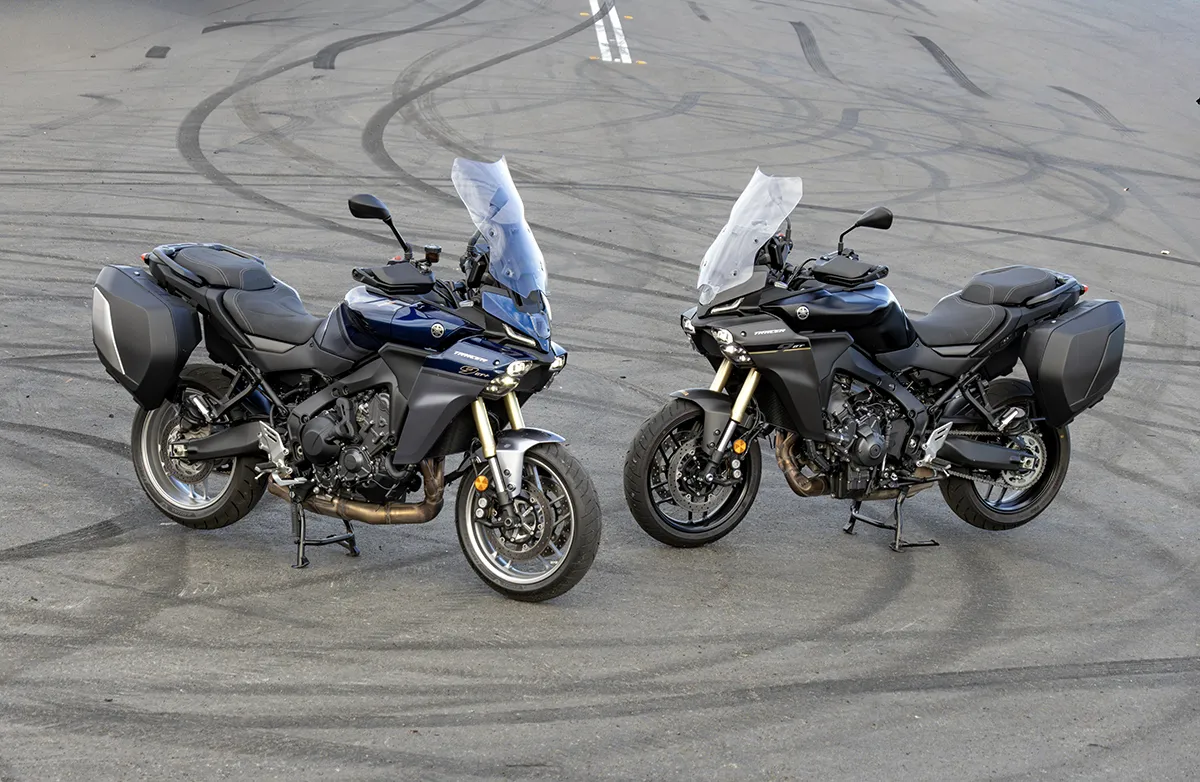
Automatic motorcycles don’t work for every application, and many old school riders simply won’t have a bar of it. But with that said, an auto on a sports tourer makes a hell of a lot of sense — less input, less fatigue, and it just lets you get on with the job. However, Yamaha are wise enough to realise that it’s not everyone’s bag and so its Tracer 9 is now available in both a manual or an auto variant, the Tracer 9 GT and Tracer 9 GT+ Y-AMT. But there is an elephant in the room and that is the manual mode on the Tracer 9 GT+ Y-AMT which, if you can get over the fact that your left foot is now redundant, provides the best of both worlds.
Sitting side by side, the Tracer 9 GT and Tracer 9 GT+ Y-AMT are, at their core, the same motorcycle. Same glorious CP3 inline triple donk, same chassis, same semi-active KYB suspension, and the same overall brief — a fast, comfortable, do-it-all sports tourer. The differences don’t come from the foundation, they come from what Yamaha has layered on top, and that’s where the two bikes begin to separate.
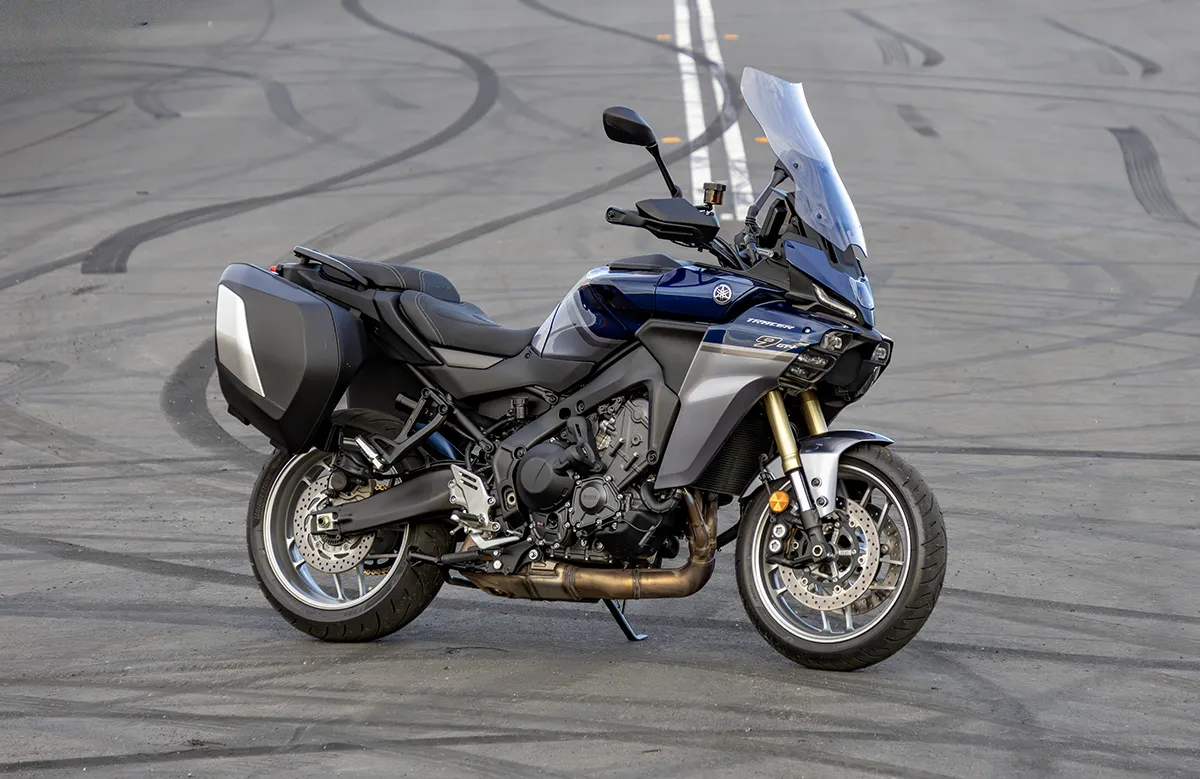
The headline change is the Y-AMT system on the GT+. No clutch, no foot shifter. Instead, you’ve got a fully automatic mode or a manual mode controlled by finger-operated paddles on the left-hand switch block. Alongside that, the GT+ brings radar into play, which adds adaptive cruise control, blind spot detection, an integrated braking system, vehicle hold control, and tyre pressure monitoring. All the extra fruit, of course, means that the GT+ Y-AMT is a touch heavier at a claimed 232 kg wet versus 227 kg for the GT — and significantly more expensive, but you're paying extra for a lot of extra technological fruit.
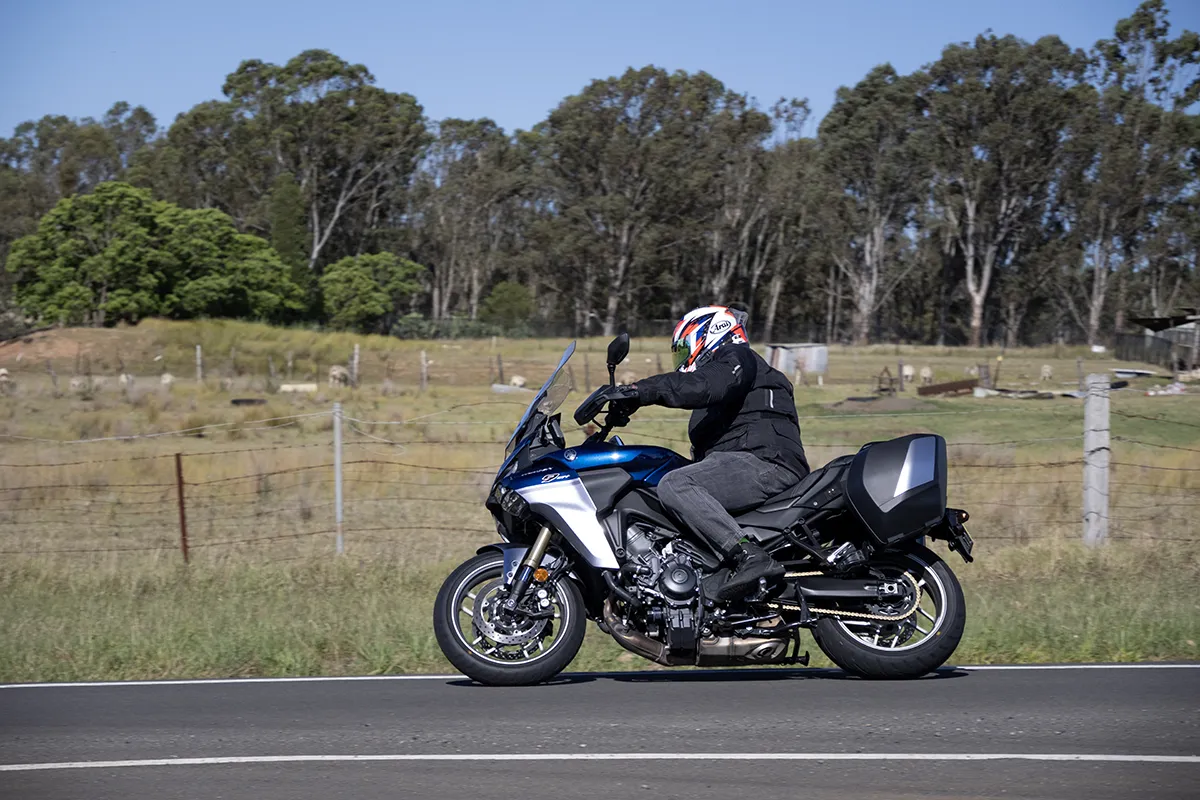
The Y-AMT automatic box is always going to be the big question in your decision on whether to buy the GT+ or the GT. Unlike Honda's DCT system, the Y-AMT system is essentially a standard gearbox and clutch setup that you find on the GT, with a bunch of servos handling the clutch and shift duties your paw and hoof would normally take care of. For the majority of riding situations that the GT+ will find itself in, the auto box is excellent, especially when it comes to banging out miles on the highway — it's smooth, if a little noisy, easy, and it just gets on with the job. Pair it with adaptive cruise and it turns into a proper long-distance tool that takes a chunk of effort out of riding. For covering kilometres, it's an absolute pleasure to ride. It's only when you start attacking corners with vim that it's less than ideal and, on occasion, it’ll spew forth a shift in gear when you wouldn’t necessarily have chosen. It’s not dramatic, but you notice it. But never fear riders, because there's also the option of shifting into manual mode and timing the shifts yourself. Shifts in manual mode are clean, smooth, and precise, and because it's electronically actuated there's no embarrassing false neutrals as you tear away from the servo.
Jump back on the standard GT and everything will feel immediately familiar to those used to a manual gearbox bike. The third-generation quickshifter is excellent — smooth, precise, and up there with some of the best in terms of slickness.
Yamaha's CP3 inline triple engine is just a glorious beast. It's why the MT-09 has a cult following and it's what makes the YZF-R9 such a fun bike to play on. If you've never ridden a bike with a CP3 donk in it, well then you haven't lived; it's truly one of the most entertaining engines created — meaty midrange, bucket loads of torque, and it's got some character which many modern engines simply don't have. There’s 117 hp (87.5 kW) on tap at 10,000 rpm and 93 Nm of torque at 7,000 rpm, more than enough to drag you, a pillion and all your junk around and still shred your licence.
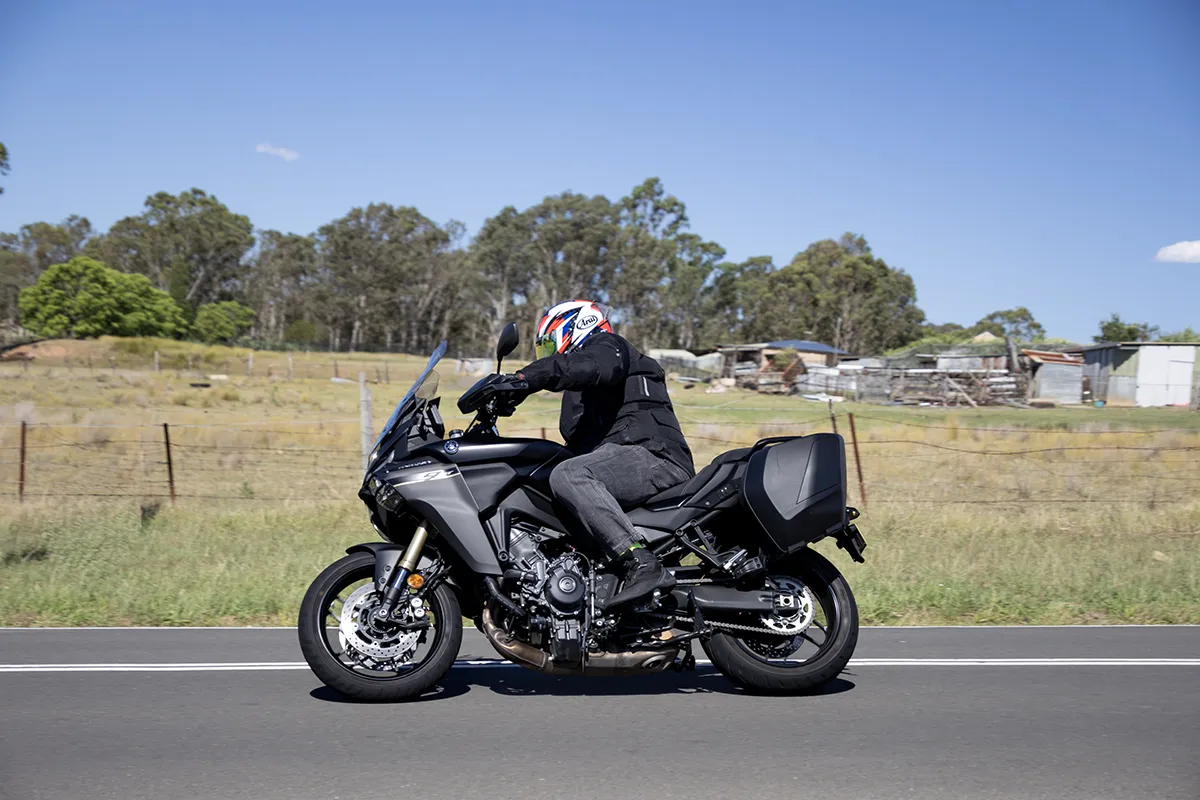
There’s nothing between the two when it comes to suspension and chassis in real-world riding. The semi-active KYB setup does a very good job of keeping everything composed, whether you’re cruising or picking the pace up a bit. It reads the road well, settles the bike quickly, and gives you enough feedback to stay connected without beating you up. It’s one of those systems that just works, and you don’t really think about it — which is exactly the point.
The chassis carries that same confidence. It’s accurate, stable, and surprisingly agile for what it is. You can move it around easily, tip it in without hesitation, and it holds a line well. The extra weight of the GT+ doesn’t show up in any meaningful way once you’re rolling. They feel the same in that respect.
Brakes are strong and dependable. Not spear you over the handlebars strong, but more than good enough for the job. There’s decent feel at the lever and plenty of stopping power for road riding. On the GT+, the unified braking system is working away in the background, but it’s subtle. You’re not fighting it, and it doesn’t get in the way.
The radar-based features are going to split opinion. Adaptive cruise control works well — really well if you’re the kind of rider who wants that sort of thing. It takes the edge off long highway stints and does exactly what it’s supposed to. Personally, it’s not something I’d use much, but that’s preference, not a flaw.
Blind spot detection is a useful addition. It’s not a replacement for doing a proper head check, but it’s a handy extra layer of awareness, especially in traffic. If you’re into tech, the GT+ delivers.
Both bikes run the same 7-inch TFT and switchgear setup. It’s a big step forward from Yamaha’s older systems. Menus are logical, easy enough to navigate once you're up to speed, and most of what you need is where you expect it to be. The left-hand switch block is busy, and the new indicator rocker switch do-hickey is still crud, but it’s something you’d adapt to over time.
Comfort is one of the Tracer’s strong suits. The riding position is open, relaxed, and well suited to long days in the saddle. Wind protection is solid overall, although at 186 cm there is a bit of buffeting at helmet level. A slightly taller screen would sort that without much effort. Seat comfort is good, and both bikes feature an adjustable seat height of 845 mm or 860 mm. The seat itself is flatter with deeper padding, and while it is taller than previous versions, Yamaha claims it’s slimmer through the stand-over area so it should feel pretty similar.
When you strip it all back, the decision is pretty straightforward. The Tracer 9 GT gives you everything you need — great engine, excellent chassis, solid electronics, and a genuinely good quickshifter — at a lower price point. It’s the simpler, more traditional option, and for a lot of riders, it’ll be the one that makes the most sense.
The GT+ Y-AMT is for riders who want more tech layered into that same package. The automated transmission, radar systems, and added features do bring real benefits, particularly for long-distance riding. Whether that’s worth the extra money comes down to how much you value those systems.
Both bikes are very good at what they’re designed to do. The difference is whether you want to ride it, or have a bit more of the riding done for you.