
Author: Pete Vorst Date Posted:14 January 2026
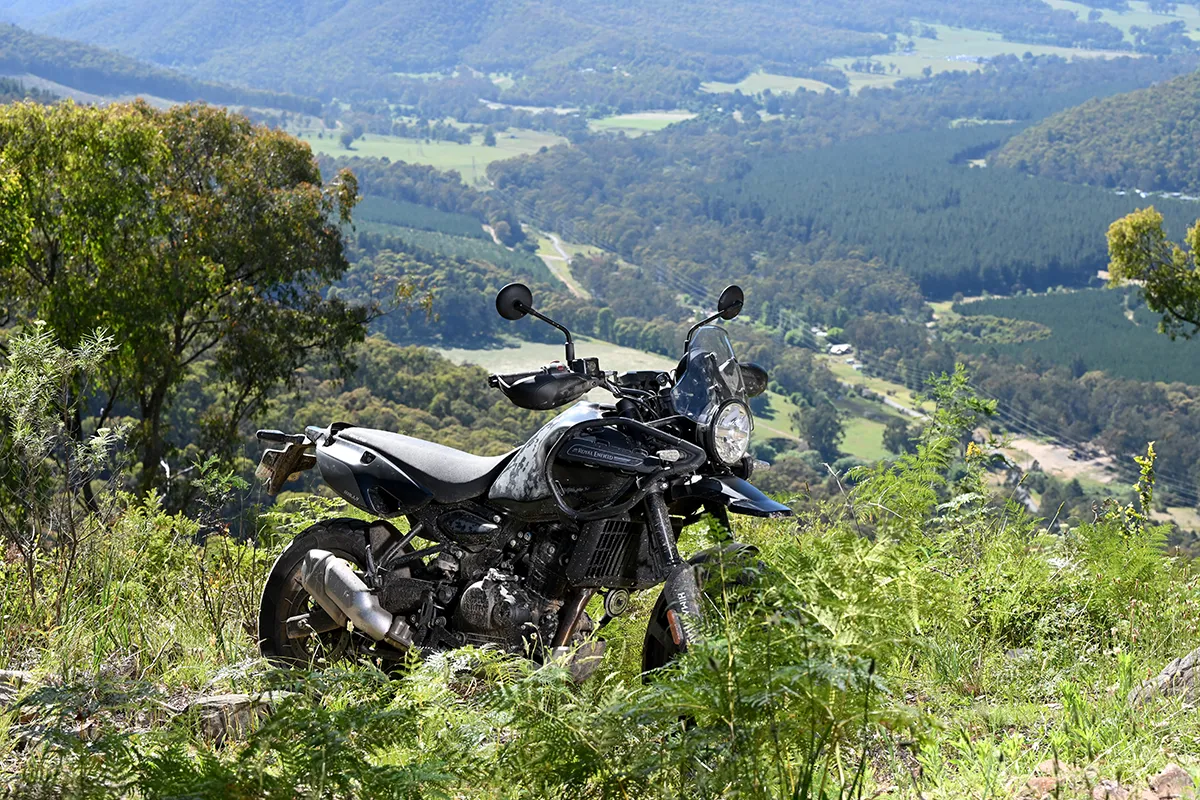
There's barely a mark on it, I thought, as I looked over Royal Enfield's new Himalayan 450 Mana Black Edition lying amongst what used to be a barbed-wire fence. The fence - or the sad remains of it - belonged to farmer Joe Unknown somewhere in the Victorian High Country, where Royal Enfield had decided to host the press launch.
I checked myself over - not a scratch. As I grabbed every brake I could find and my backend clamped shut with fear, I was convinced both the bike and I were done for as we sailed off a blind right-hander at around 60–70 km/h. Yet, in true Himalayan style, neither of us came out too badly. We stood the Mana back up, pulled wire from places it had no right being - on both of us - pinched some of Joe's fence to hold the stand in place after it lost its spring, and I thumbed it back to life. From there, I rode it for the rest of the event as though nothing had happened.
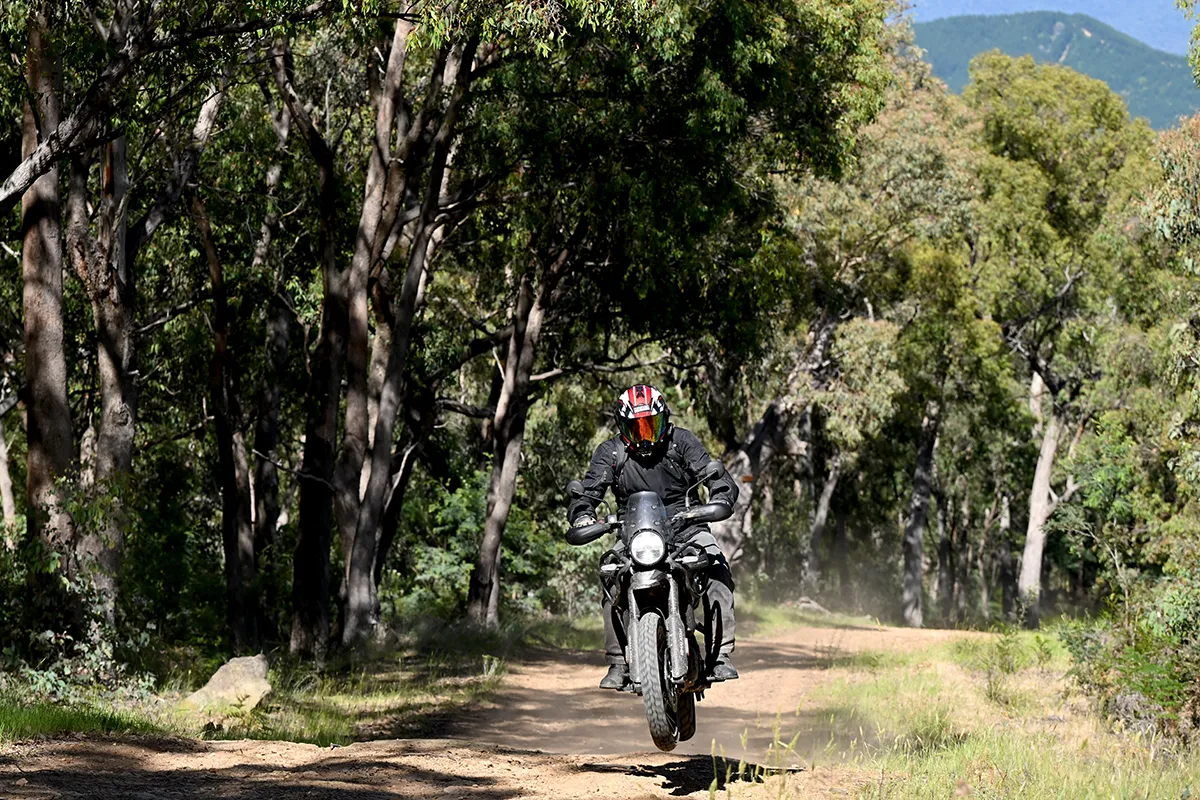
And that sums the Himalayan up - tough as nails. It's never claimed to be the quickest or most high-tech adventure bike around, but if a nuclear winter ever arrives, only cockroaches and Himalayans will be left roaming.
The original generation from 2016 was a no-frills but reliable travel companion that could go almost anywhere if you weren't in a hurry. Its Achilles' heel, at least until the arrival of the 450 in 2024, was its weight, basic suspension and the LS410 engine, which always felt like an engineering party trick in how little horsepower it managed to produce. Still, for the price and what it offered, there wasn't much reason to complain.
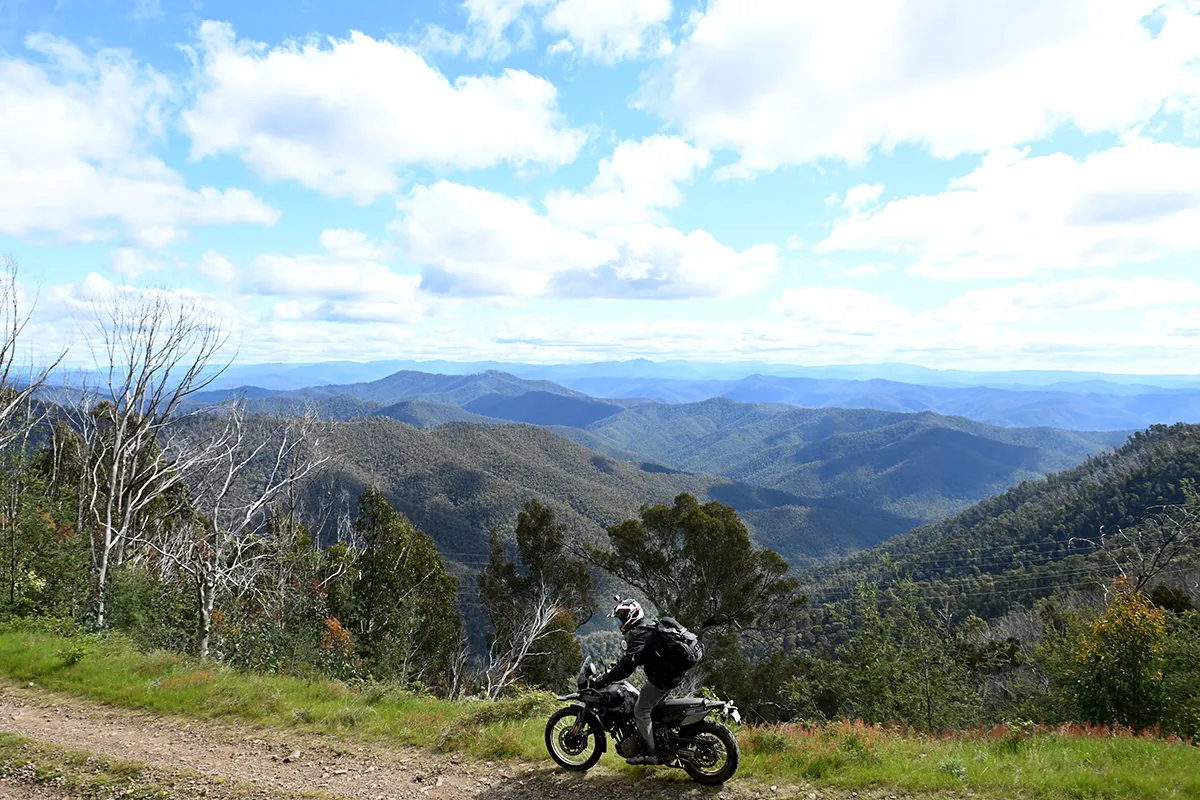
The 450 changed all that. New frame, new ergonomics (my knees were grateful for the tank crash bars being out of the way), better suspension and, most notably, the Sherpa 450 engine that finally gave the Himalayan the lungs it deserved. Suddenly it could sit on the highway without begging for mercy and didn't require you to downshift half the gearbox for every incline.
Eighteen months after the Australian launch, Royal Enfield has rolled out a new variant. The Mana doesn't rewrite the Himalayan story; it just adds more of what riders actually want. The name nods to India's Mana Pass - one of the highest motorable passes on Earth - and the upgrades are aimed squarely at boosting its adventure credentials.
The most obvious change is the charcoal-on-black paint scheme, unique to this edition and giving it that tougher, stealthy look. It also gains plastic hand guards, a smart-looking embossed bar pad, a grab strap and a rally-style rear guard that really tidies up the back end.
The rally theme continues with a one-piece seat replacing the standard two-piece setup. The new unit bumps seat height from the 825–845 mm adjustable range to 860 mm. It's not a huge leap, but for shorter riders it may shift the balance a bit. If you're taller, like me at 186 cm, it's actually a welcome addition - more leg room, less knee bend and easier movement on the bike when things get rough.
The biggest and most useful inclusion for anyone who rides off-road is the tubeless wheels. Anyone who's had to pull a tube out on a trail knows the misery involved. With tubeless rims, unless you've torn the tyre to ribbons, you plug the hole, pump it up and carry on. During the launch, one of the journos picked up a flat in the High Country and it was sorted before anyone had finished muttering their first swear word. No levers, no sweat, just fix and go - a huge win for real-world adventure riding.
From here, the bike is the Himalayan 450 we already know. The Sherpa 450 engine is the star of the show, delivering a massive bump in performance over the old 411. To put it in perspective, the Mana has more punch than several competitors, including CFMOTO's 450MT, KTM's 390 Adventure R and even Kawasaki's legendary KLR650.
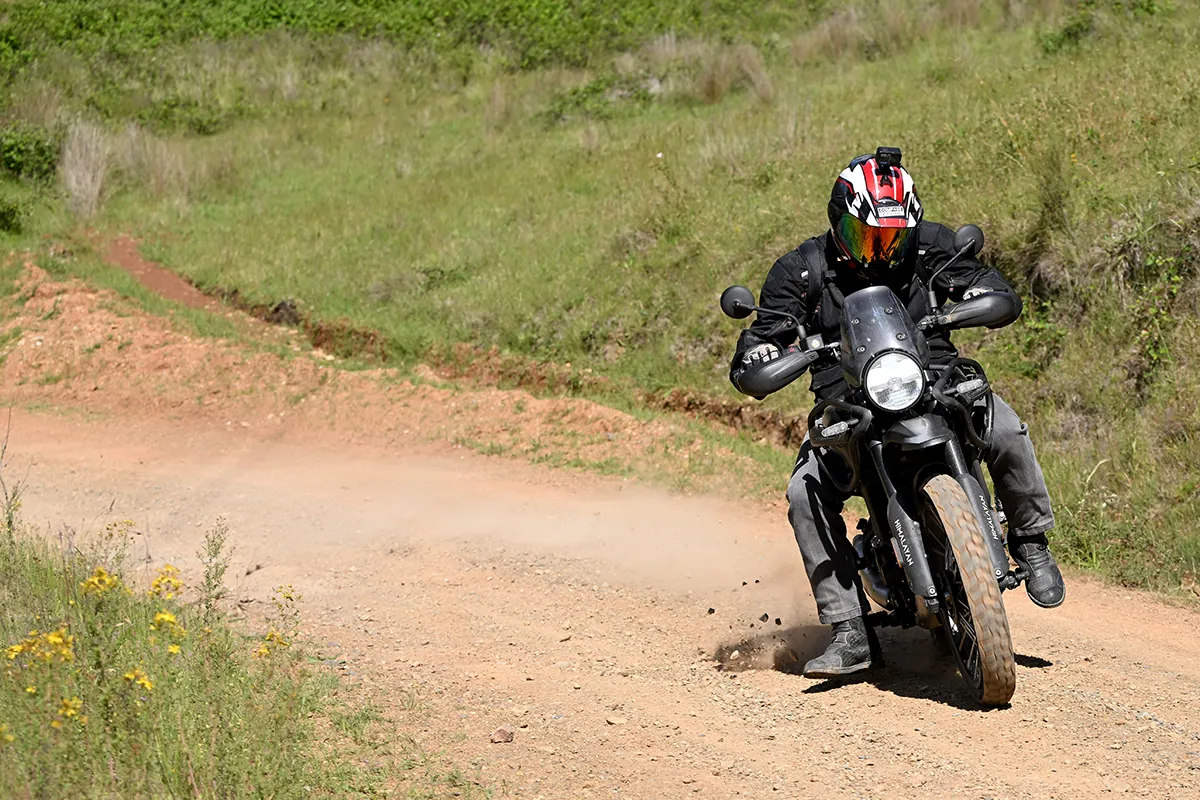
There's enough torque to get you up most rocky climbs and rutted messes, though you'll still swap gears often - it's a 450 single, so that's just part of the charm.
Ergonomically, there's little to grumble about, though the Himalayan does still feel physically small compared with something like the 450MT. That said, size is part of why it's so manageable on technical stuff.
One thing absolutely worth praising is the air-filter access. With the filter under the tank, and the tank held on by a single bolt, you can lift it off and have the filter out in minutes. Cleaning it by the campfire becomes an easy ritual rather than a chore.
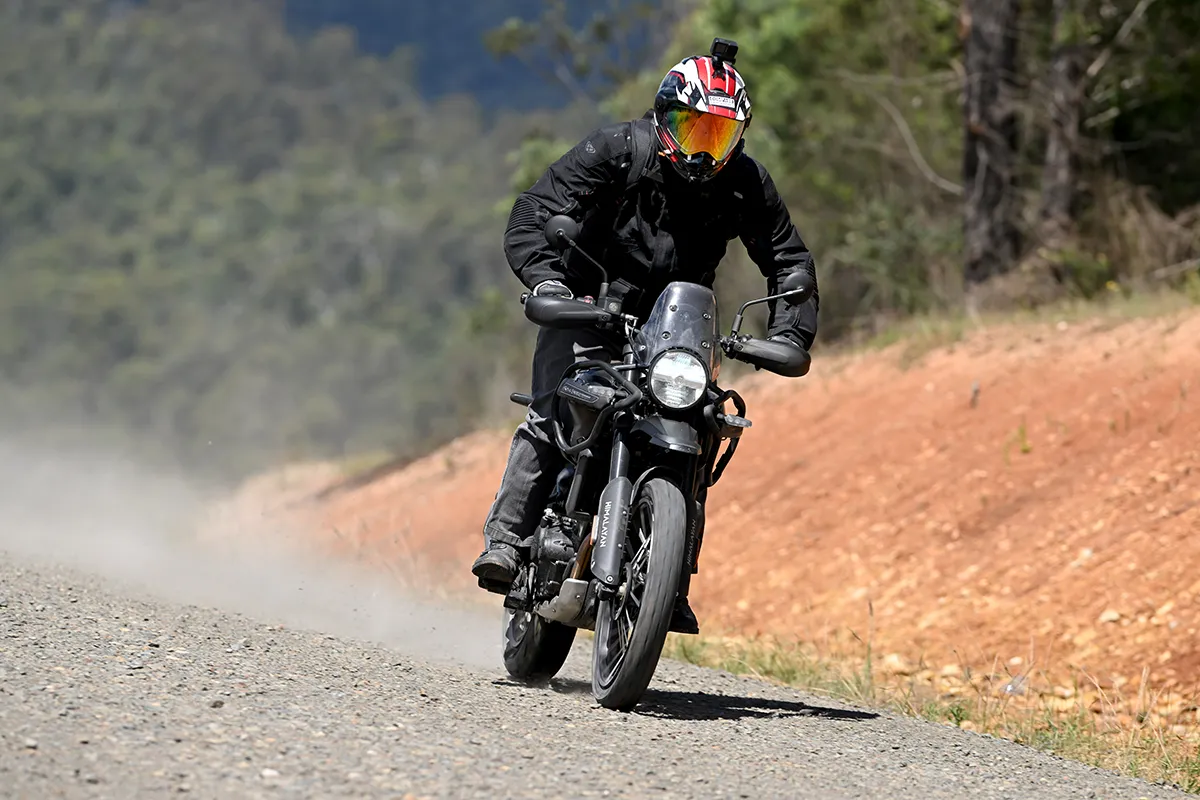
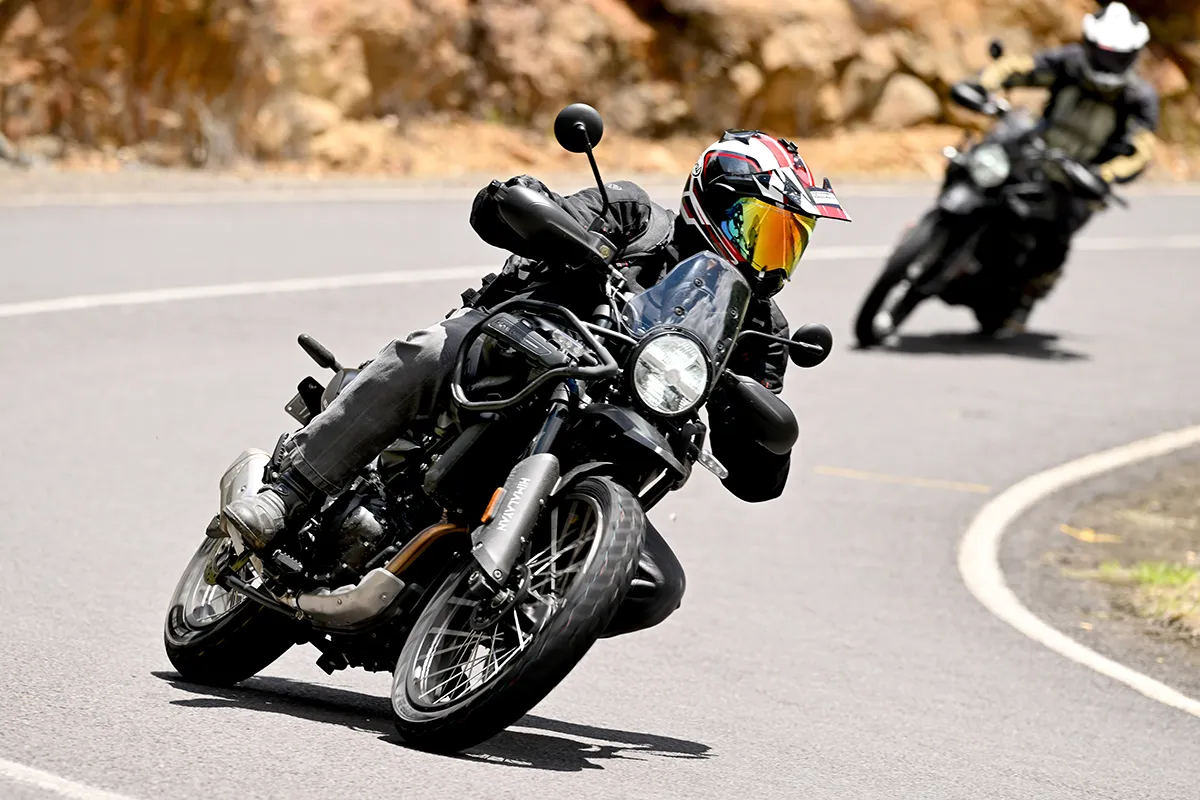
The rest of the package stays the same: the Sherpa engine acting as a stressed member in the steel twin-spar frame, the steel swingarm, the preload-adjustable rear shock and the 43 mm Showa USD forks with 200 mm of travel at both ends. It's simple, solid kit that works. It'll bottom out if you get too enthusiastic or hammer corrugations while on the gas, but overall it's composed and predictable whether you're gliding over bitumen or smashing through rocks.
Brakes are handled by ByBre with good feel and more than enough stopping power, and the CEAT tyres performed far better off-road than expected once pressures dropped. Still, if you're riding dirt often, swapping them for something chunkier is a no-brainer.
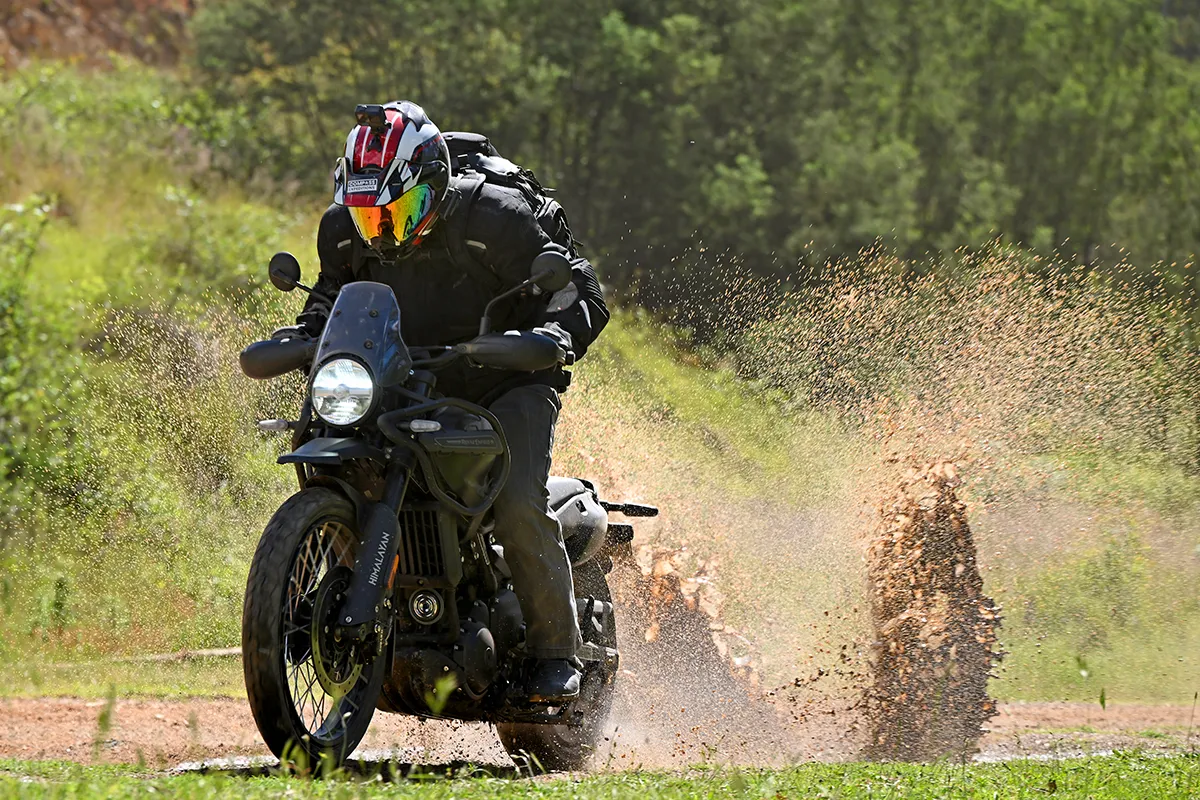
The dash remains clear and easy to navigate, with RE's app letting you mirror Google Maps straight onto the screen. Ride-by-wire brings four mode combinations depending on ABS settings, and switching between them is straightforward, provided you're stationary.
The Mana Black Edition brings just the right amount of extra adventure flavour. The taller seat, rally guard and cleaner rear end all help, but the tubeless rims are the real star. For anyone who enjoys off-road riding without unnecessary complications, this alone is worth celebrating.
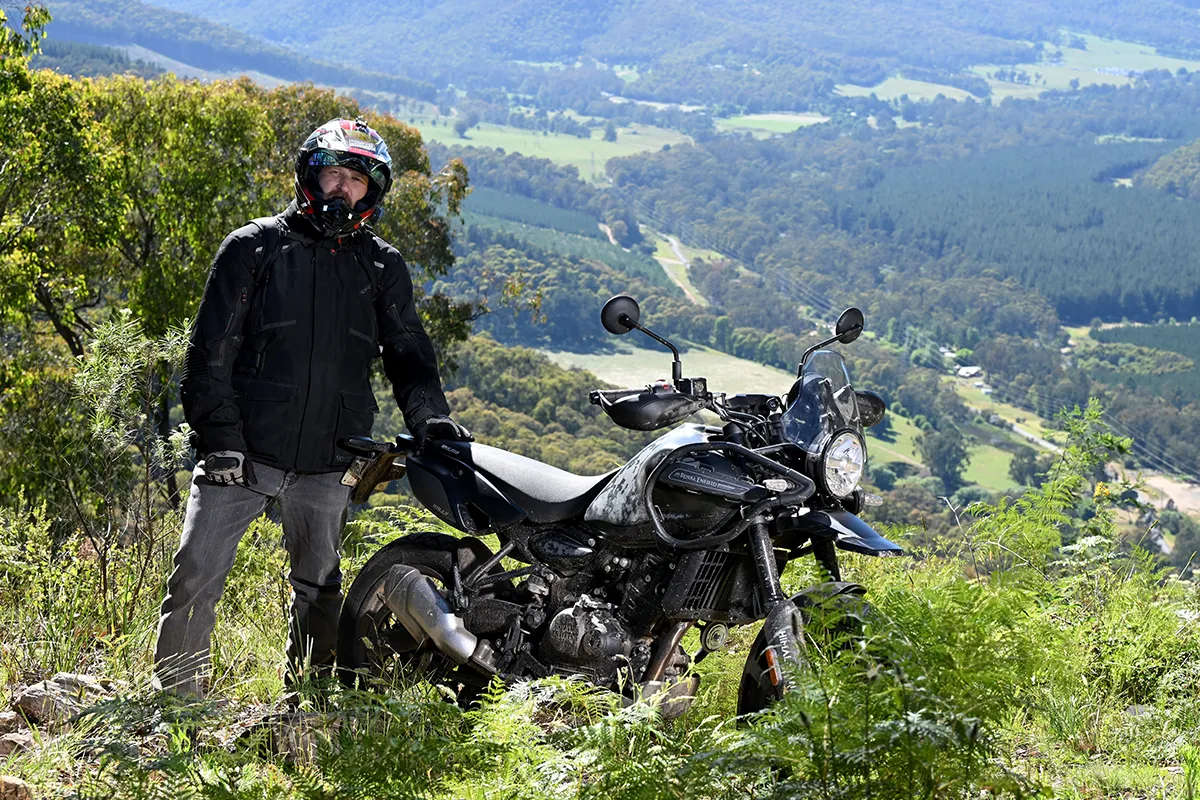
The Himalayan 450 was already a huge leap over the old 411, and the Mana Black Edition simply adds a handful of genuinely useful features without messing with the formula. Tough, honest and up for anything - it just keeps going, even when you accidentally introduce it to a barbed-wire fence.