2026 YAMAHA R7
SNEAKY PETE
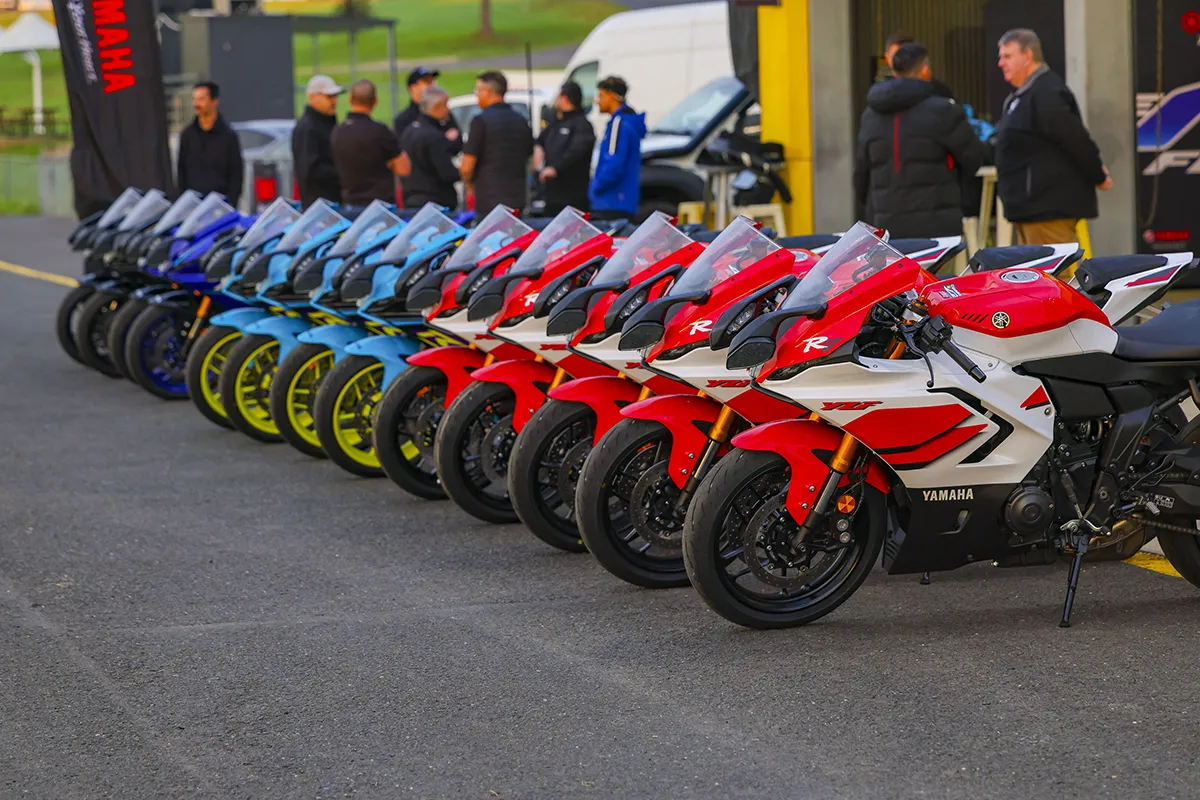
I realised after two sessions at the Australian launch of Yamaha’s new YZF-R7 at Sydney Motorsport Park that nobody was checking wristbands to see which group people were supposed to be riding in. Track time is expensive time, so with spare R7s hanging around in the pits, I decided it would only be right and proper to ride the R7 in as many sessions as I could.
By the end of the day, I'd racked up thirteen 20-minute track sessions, many back-to-back, aboard Yamaha's heavily revised 2026 YZF-R7, which resulted in two things: a thorough understanding of both the High Output (HO) and Learner Approved (LA) models, and the inability to walk properly for the next few days (stretch those muscles, kids).
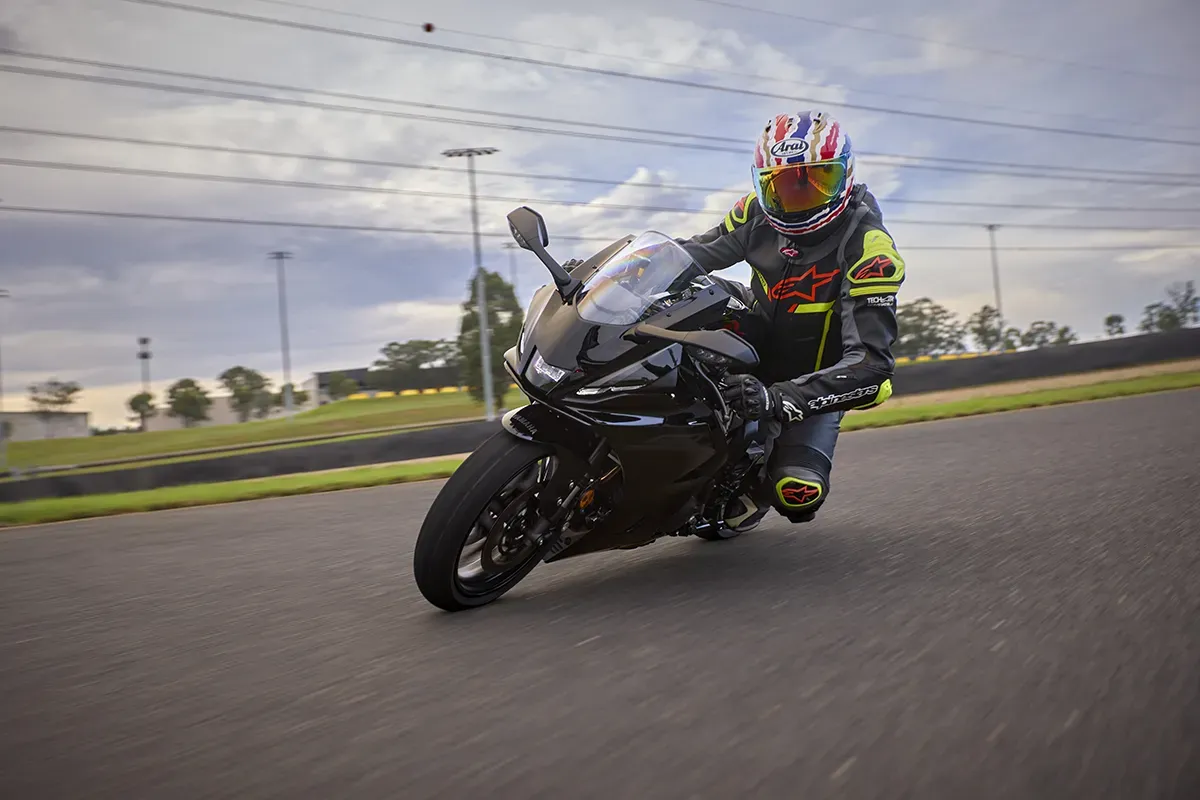
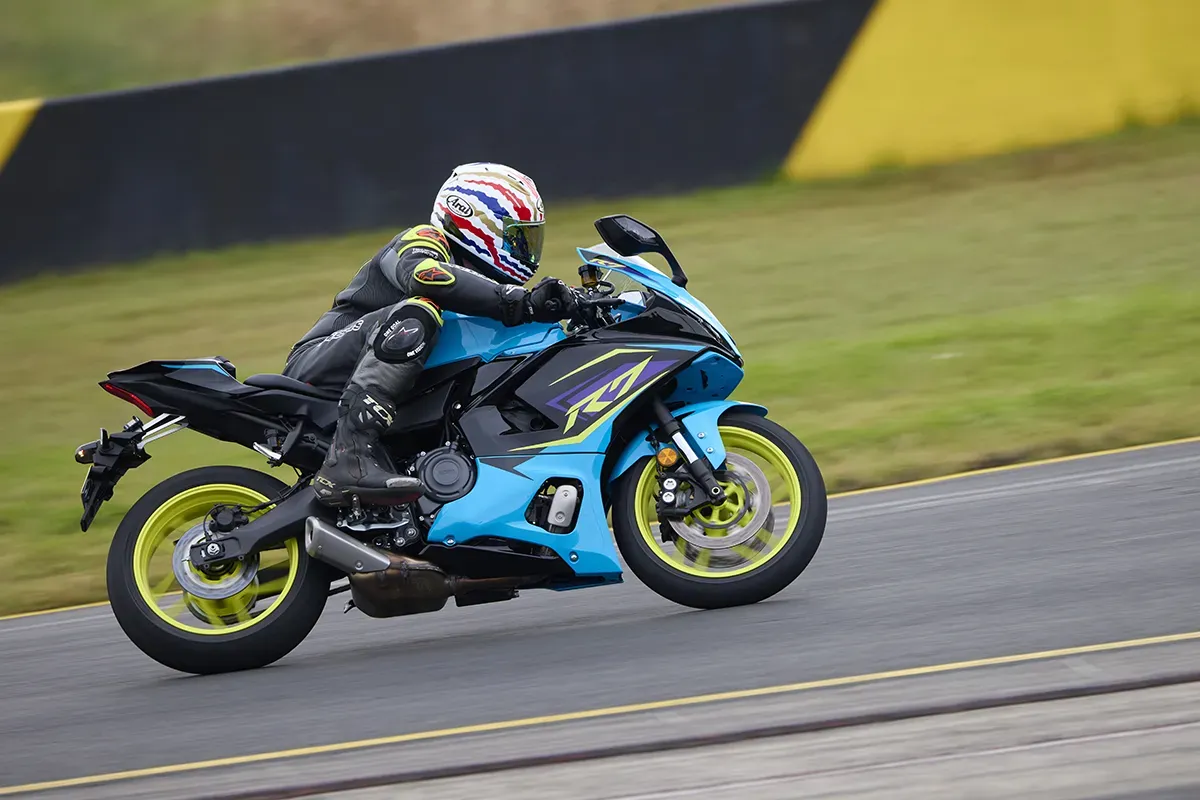
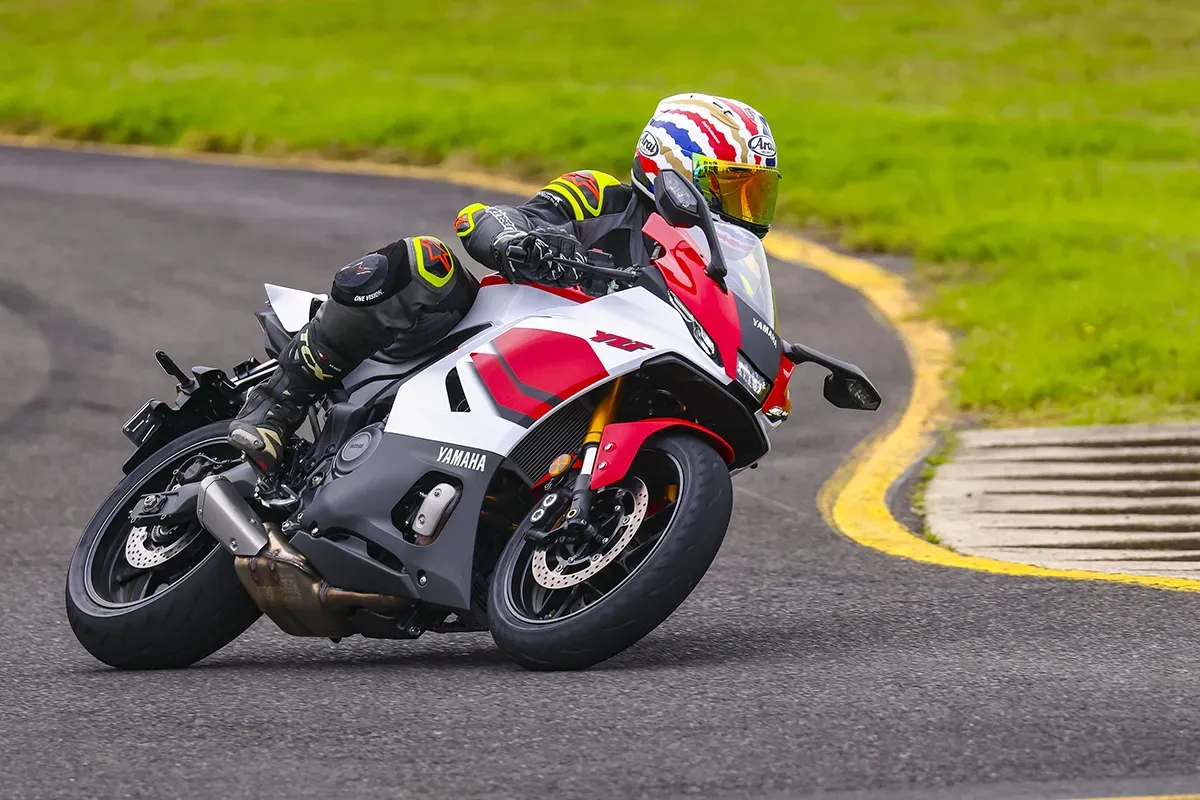
Since its launch in 2022, the R7 has become a genuine success story for the tuning fork brand. It topped Australia's Supersport segment in 2025 with well over 5,000 units sold, with a majority of those being the LA model. This is, of course, unsurprising as the R7 has always been dependable, capable and fairly sexy to look at.
So, Yamaha could have easily rolled out a new colour scheme, tweaked a graphic or two and continued selling truckloads of them.
Instead, the engineers went back to the drawing board and delivered one of the most comprehensive updates you'll find outside of an all-new model.
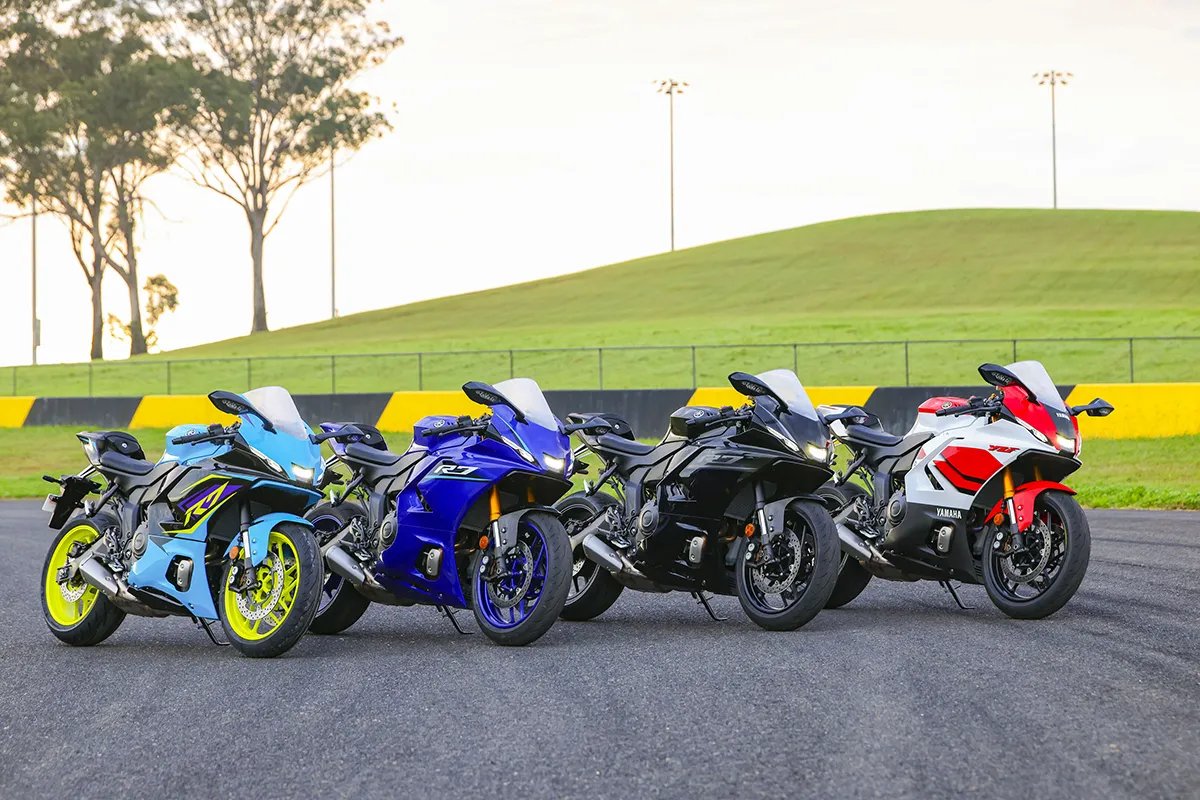
At first glance, the changes are obvious. The new bodywork is sleeker and more compact. The indicators are now incorporated into the mirrors, and there are even subtle winglets integrated into the fairing. Overall, the R7 now has a sharper, more aggressive look.
Underneath, however, is where the real work has been done.
The CP2 engine is now housed in a new, more rigid frame, paired with a redesigned asymmetrical swingarm. The KYB forks receive lighter internals and revised settings, while new SpinForged wheels reduce unsprung mass and rotational inertia.
Yamaha has also fitted ride-by-wire throttle, a six-axis IMU, a third-generation quickshifter with auto-blipper as standard, a new TFT dashboard, a comprehensive suite of rider aids and factory-fitted cruise control – nice.
The CP2 parallel twin remains unchanged, and this is a good thing. It’s hardworking and bulletproof, and if it ain't broke, don't fix it. The High Output 689cc version produces 72.4 hp (54 kW) at 8750 rpm and 68 Nm at 6500 rpm, while the Learner Approved model uses a 655cc version producing 51.4 hp (38.3 kW) and 57.5 Nm.
Both engines do, however, benefit from a revised airbox, optimised intake ducting, updated fuelling and ride-by-wire throttle control. Yamaha says the changes improve throttle response, increase low and mid-range torque and create a more engaging induction note, and I would have to agree with them.
The riding position remains sporty without becoming torturous, while the revised ergonomics make it easier to move around on. There's a new seat, revised tank shape, and slightly altered handlebar position, which all contribute to a motorcycle that's more comfortable without losing its sporty edge.
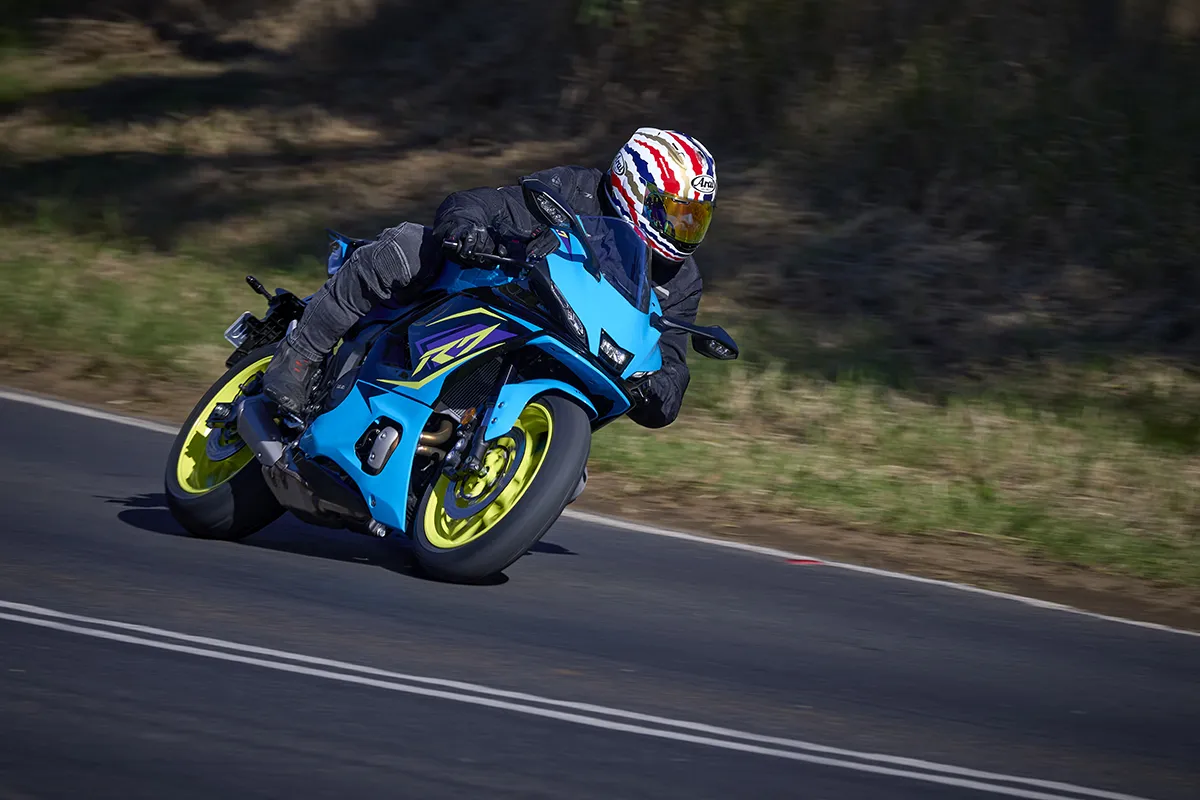
With so many changes, of course, the R7 feels different. On the road you're going to love the comfier ride, the electronics that'll help save you from spearing yourself into somebody's front yard, and the cruise control. For those that like to give their bikes a thorough caning up the local bike road, the suspension is arguably the biggest improvement. It works better in every scenario, feels more refined and is essentially faultless unless you're really fast, really big or really small. The result is an R7 that turns in sharper, changes direction more easily and all without sacrificing stability.
As it always has, the CP2 delivers its performance in a broad, friendly and thoroughly usable manner. There's plenty of low-down grunt, throttle response is crisp and predictable – Yamaha absolutely nailed the ride-by-wire throttle brief – and it never feels intimidating or demanding.
So, after fanging around on the road component of the launch, it is safe to say the new R7 has improved not just a little, but a lot. It’s significant enough that, for those that might have the previous generation, the update is worthwhile.
The biggest differences, however, came once we rolled through the gates of Sydney Motorsport Park and started pushing the R7 outside of what your average road rider normally does.
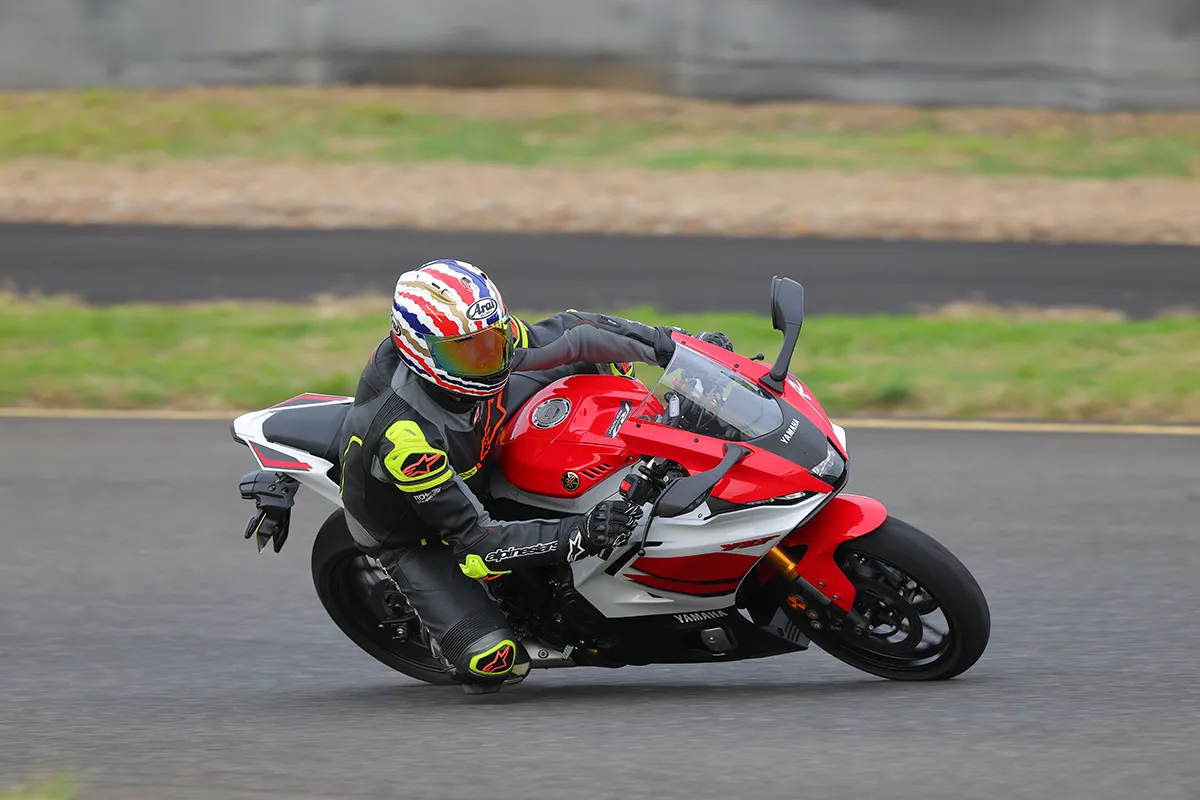
As per on the road, the chassis changes have resulted in an agile but stable little track rocket. And the best bit? It is incredibly forgiving. Come barrelling into a corner too quick? No problem – the R7 is stable as a rock under brakes. Come sailing into SMSP’s downhill hairpin carrying too much speed? No problem, just tip it on its nose and drop a knee – it’s effortless and confidence-inspiring. You can turn in a little too aggressively, carry a touch too much brake into a corner, miss an apex and make all sorts of odd shapes with your lines through a corner, and the R7 simply shrugs and gets on with the job.
At 95kg plus half a cow and riding completely standard motorcycles on standard settings and standard Bridgestone Battlax S23 tyres, the suspension never felt overwhelmed. In fact, it was difficult to fault. There was excellent support under braking, plenty of feel on corner entry and enough compliance to maintain confidence when the pace increased.
The R7’s braking hardware remains largely unchanged, but that's hardly a criticism. After 13 track sessions I experienced no fade, no inconsistency and no unpleasant surprises. The best compliment I can pay them is that I barely thought about them. They simply did their job lap after lap.
Aside from occasionally noticing the ABS indicator flicker under hard braking, the various systems largely faded into the background. They were there when needed and invisible when not.
The quickshifter was about the only thing that raised an eyebrow on occasion. Upshifts and downshifts were generally seamless and, on the road, I had no reason to complain, but with the rigours of track work laid before it, I did experience the occasional false neutral dropping down through the gearbox. This was not purely caused by my size 15 feet doing strange things, as a number of other journalists at the launch made similar comments.
With only 34cc separating them, I was curious to see how much difference there really was between the High Output and Learner Approved models.
Down low and through the mid-range, the two bikes feel remarkably similar. But once the revs begin to climb, the differences become more obvious. The LA starts to run out of puff while the HO continues pulling strongly towards the top of the rev range. It's not subtle, and it's certainly noticeable on a racetrack.
Whenever I covertly inserted myself into one of the slower groups, I made a point of grabbing a HO. The extra poke made overtaking easier on the straights, particularly when some of the newer riders were experimenting with creative interpretations of racing lines, making overtaking in the corners a wondrously scary pursuit.
After two days riding both R7 variants, one thought kept rolling around in my head.
FINAL THOUGHTS:
The R7 feels like a motorcycle that's been continuously refined for decades, like the marque's R1 or its YZ motocrosser, but it hasn't. It's just that Yamaha has got the motion-potion ingredients just right.
Whether you're eyeballing the HO or perving at the LA as your entry into the world of motorcycling, as an all-round package the R7 really is hard to fault.
Yamaha has taken what was already one of its most successful models and thrown a bunch of updates at it. They probably didn't need to do that to maintain their market dominance, but they did it anyway. And the result is a motorcycle that's more capable, more sophisticated, more confidence-inspiring and, ultimately, more fun than it's ever been.
And if the fact I spent most of day two trying to sneak into extra track sessions aboard one isn't endorsement enough, I'm not sure what is.